
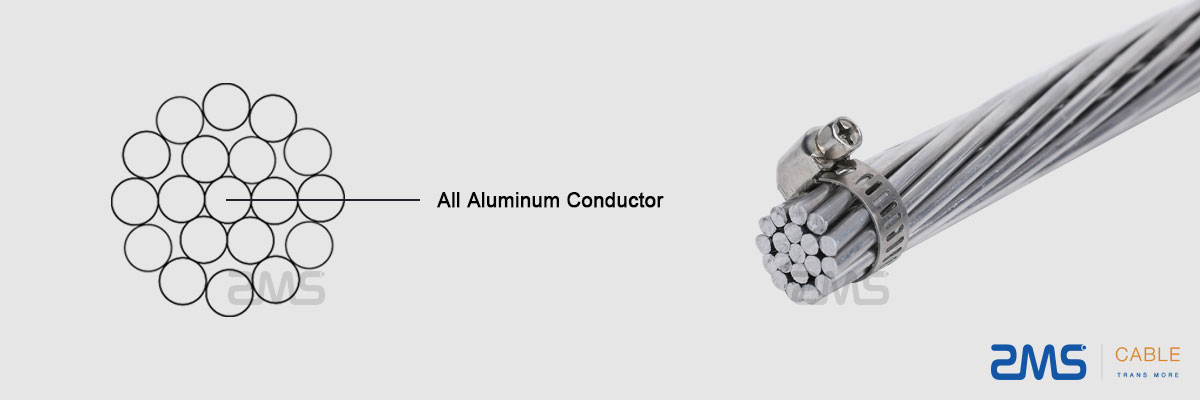
AAC conductor is stranded from hard-drawn 1350 aluminium wires. It offers the highest conductivity-to-weight ratio of the bare conductor family, and its uniform construction suits short spans, substation buses and densely built urban networks. ZMS strands AAC to BS 215 Part 1 and IEC 61089, from 10 mm² to 1000 mm².
Product pages include the full stranding table, electrical data and applications.
All aluminium conductor for urban distribution and short-span high-current routes.
Technical details →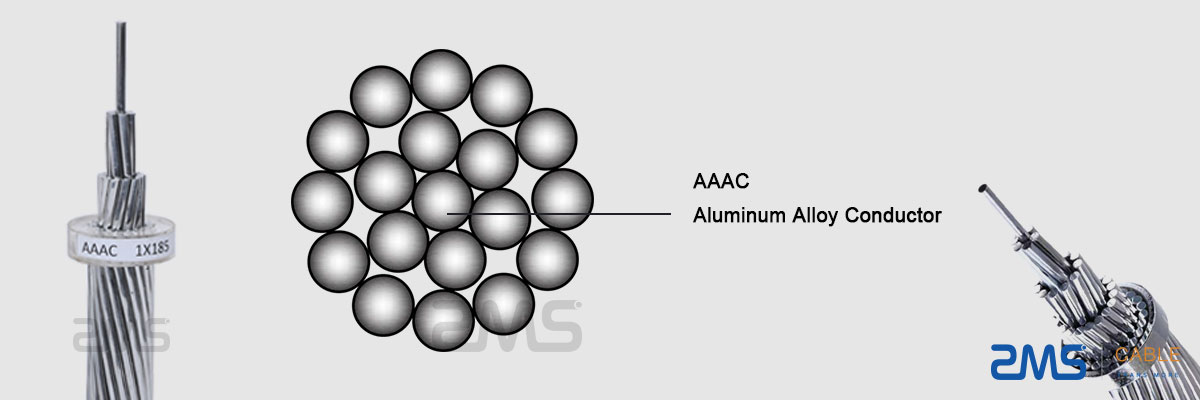
All aluminium alloy conductor — the stronger alternative for longer spans and coastal routes.
Technical details →Different section or stranding? We build AAC to the project specification.
Start a custom inquiry →| Conductor | Hard-drawn aluminium wires (1350-H19) |
|---|---|
| Section range | 10–1000 mm² |
| Stranding | 7, 19, 37 or 61 wires concentric lay |
| Conductivity | 61 % IACS minimum |
| Corrosion | Very good — homogeneous aluminium construction |
| Standards | BS 215 Part 1, IEC 61089, ASTM B231, DIN 48201 |
| Common code names | Midge 22, Ant 50, Fly 60, Wasp 100, Hornet 150, Chafer 200, Butterfly 300 mm² |
| Packing | Wooden or steel drums, 1000–3000 m standard lengths |
Typical construction data. Final values are confirmed on the order-specific datasheet.
We can adapt this family to the project requirements. Common options include:
AAC is chosen for conductivity and simplicity, where spans are short and tensions modest.
Short pole-to-pole spans in towns and cities where ampacity matters more than strength.
Application details →Busbar and jumper connections inside substations, where flexibility aids installation.
Application details →Low-tension rural feeders and transformer taps with modest mechanical loading.
Application details →Send the load current, span and ambient conditions. We will recommend the section and prepare a quotation.