
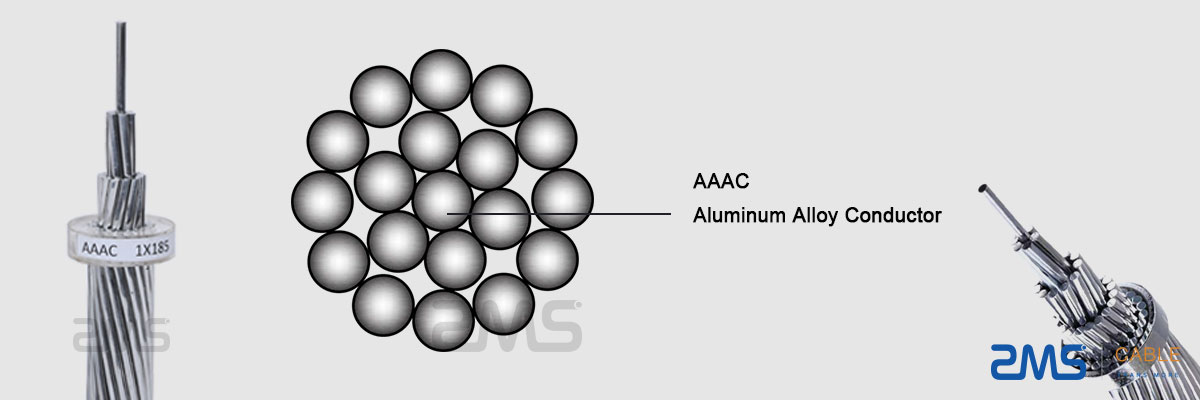
AAAC conductor is stranded from aluminium-magnesium-silicon alloy wires. With no steel core there is no galvanic corrosion risk, and the alloy provides roughly double the strength of standard aluminium. ZMS strands AAAC to BS EN 50182 and IEC 61089, in sections from about 16 mm² to 1000 mm².
Product pages include the full stranding table, electrical data and applications.
All aluminium alloy conductor combining high strength with excellent corrosion resistance.
Technical details →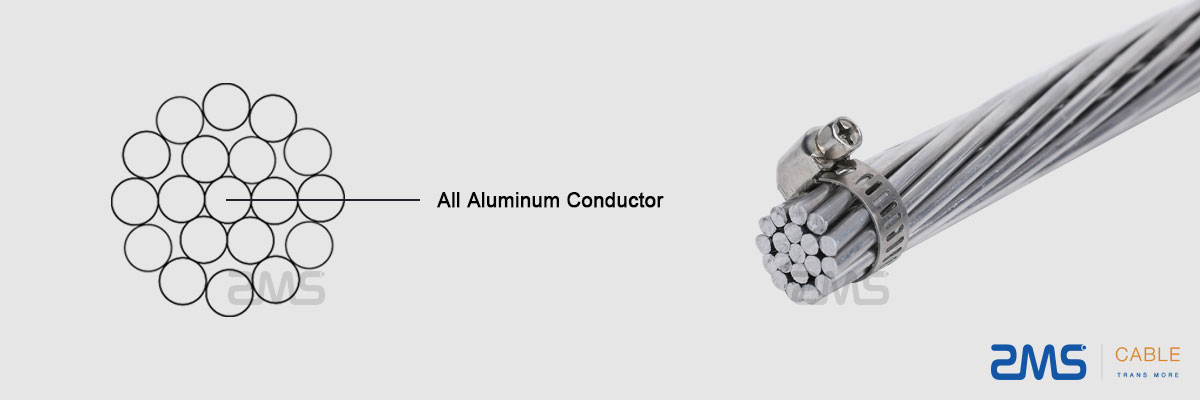
All aluminium conductor — the higher-conductivity alternative where spans are short.
Technical details →Different section or stranding? We build AAAC to the project specification.
Start a custom inquiry →| Conductor | Aluminium-magnesium-silicon alloy wires (6201-T81) |
|---|---|
| Section range | 16–1000 mm² |
| Stranding | 7, 19, 37, 61 or 91 wires concentric lay |
| Conductivity | 52.5 % IACS minimum |
| Strength-to-weight | Approx. 2× standard aluminium, no steel core |
| Corrosion | Excellent — no bimetallic corrosion path |
| Standards | BS EN 50182, IEC 61089, ASTM B399 |
| Common code names | Box 18.8, Acacia 23.8, Almond 30.1, Cedar 35.5, Fir 47.8, Hazel 59.9, Pine 71.6, Holly 84.1 mm² |
| Packing | Wooden or steel drums, 1000–3000 m standard lengths |
Typical construction data. Final values are confirmed on the order-specific datasheet.
We can adapt this family to the project requirements. Common options include:
AAAC earns its place where corrosion resistance and strength-to-weight matter more than the lowest first cost.
Salt-laden atmospheres where ACSR’s steel core would demand grease and inspection regimes.
Application details →Long spans with fewer towers, using the alloy’s superior strength-to-weight ratio.
Application details →Distribution routes through industrial corridors with chemically aggressive air.
Application details →Send the span schedule and environment class. We will compare sag-tension behaviour and prepare a quotation.